top of page

Sheltering Walls

Bare Trees in Fog

Updated: Jan 20


The 50 doves that form Free at Last, a sculpture inspired by the memorable words of Martin Luther King, Jr., in his “I Have a Dream” speech, soar upward toward a glowing midday sun. The sculpture, created by Chilean artist Sergio Castillo, was erected on Marsh Plaza in 1975. Photo by John O’Rourke

ree

I must have walked by this sculpture hundreds of times on my way to class.

Sometimes it gave me pause if I wasn't late and the wind wasn't whipping off the Charles River as was often the case on this Boston campus.


Martin Luther King, Jr. attended B.U. School of Theology some decades before I walked the same halls. His ethos permeated the place, and sometimes his words echoed, too.


This preacher-activist-student steeped in civil rights of the 1960's amidst violent protests for justice and against war, lived well beyond those current events when I was coming of age at that time.


"Current Events" was a required class in my high school and one that I looked forward to having been an avid news watcher alongside my mother in front of the TV in the evenings. Information came into the little living room via one of three networks. She had her favorite. I trusted what I heard. It bore out in the classroom. The news wasn't easy listening in the 1960's when violence was escalating across the country from campus to campus. Leaders du jour were combating well-entrenched beliefs about "others" who did not belong in American civil society. "Civil Rights" became the catch-all for those who tried to break through barriers that segregated and separated people into categories. On the evening news, I saw students my own age and younger firehosed by Boston police on their way into schools just blocks away from the BU School of Theology where the student, Martin, worked out his thoughts that would propel him into a life we remember each year on January 20.


Years and years later, when I walked the long and dank corridors of that oldest building, the cornerstone of BU's founding, I tried to see this black man bounding up the stairs. Could he have imagined himself going forward from that place to take his place as a leader in a concerted fight against age-old discrimination? Could he see himself jailed in such places like St. Augustine, Florida (where I live now) which he said at the time was the "most rascist city in America"? Did he understand how his own words that stirred the hearts of so many also stoked the anger of those opposed to his non-violent message? Would he have known in his own heart that he would meet with an untimely violent death? Much can be read into his famous "I Have a Dream" speech to shed light on his private thoughts and prayerful beliefs. It is well worth our time to see and hear his prophetic message at such a time as this, most especially this January 20. https://vimeo.com/35177221


Once in a while between my classes in conflict resolution and practical theology, I wandered up to the third floor of the Mugar Library to see some of Dr. King's papers held there in perpetuity. His typewritten words appeared like any other student's dissertation, except those words have been immortalized, like the young black man who captured current events then and now.


book excerpt timothysnyder


Updated: Jan 14


Saturday January 18, 2025 Washington, D.C.

ree


Local marches are planned in many areas. Use this link to find your area:


WHAT TO EXPECT


The People’s March will be a day of joyful resistance, community building, and powerful action. You’ll hear from inspiring speakers who will energize and unite us. You’ll connect with resources to sustain long-term resistance and participate in trainings that will equip you with critical skills to protect yourself and your community. Together, we’ll march to remind the nation that real power lies with the people—and our resistance is unshakable.


What’s the difference between the Women’s March and the People’s March?


The name “People’s March” reflects a broader, more inclusive movement—a call to community and unity. This is your chance to be part of something bigger—a movement of hope, resilience, and equality for ALL PEOPLE.


ree

Whenever the New York Times Book Review interviews an author, they ask: "What book is on your nightstand"?


Currently on the top of my pile is The Book of Hope, by Jane Goodall and Douglas Abrams. It is not a memoir of the 90-year-old activist author, it is a dialogue between the two authors exploring the question:

What is hope? Good question.


The first sentence of the book is "We are going through dark times". Written in 2021, one might see this as a prophetic statement. It is also an understatement.


Last week, Jane Goodall was awarded the Medal of Freedom by President Biden. It is the highest civilian honor given for exemplary work and life. Goodall herself is known through her relentless support of the chimpanzees which led her to speak out about climate change in early days. She is still as vocal in her efforts to turn the tide, metaphorically and physically. She says of those who stand up against it ". . .even when they lose their lives, their voices still resonate long after they are gone, giving us inpiration and hope . . ."


In Goodall's view, hope is possible because of four reasons: 1) the human intellect, 2) the resilience of nature, 3) the power of young people, 4) the indomitable human spirit.

Each of her reasons is supported by experiences over a lifetime of living with chimpanzees as compared with human beings! She cannot see how anyone of us would use our superior intellect to destroy what nature has provided us free of charge, except by greed. Young people figure into hope as next to come with lots of new ideas, technology, and energy, unless consumed and subsumed by social media. And, last but not least is our own "indomitable" human spirit. She is no Polyanna. She recounts story after story of ordinary people facing formidable challenges and their indomitable spirt playing out in crises after crises. Her life is one notable example. But what IS hope?


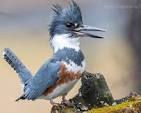
An author from another era gave hope a name: "The thing with feathers that perches in the soul and sings the tune without the words and never stops at all", wrote Emily Dickinson. This morning I heard the birds singing when I stepped out in the 39 degree dawn. These song birds have come from climates far North of this tropical place, flying through the dark of night. Darkness does not deter them from making the trip. What does hope have to do with it? Everything!


All projects, whether writing, baking (though I wouldn't know), painting, drawing, studying, are built on hope. Without hope we would not begin, could not imagine anything, may not finish a darn thing. Hope keeps us alive -- keeps us going when obstacles loom large. Hope is precious. In times of multi-crises, we have four options, says Professor Marshall Ganz*: 1) to leave, 2) to fight (which may be necessary), 3) to build (by finding sources and others with similar value systems and spirit), 4) to give up. These four reflect the four elements of hope that Goodall spells out. I noticed the word spirit in both analyses of the "idea" of hope, which may be all that it is like democracy itself. We need hope to sustain such big ideas. The idea of living without hope is born in darkness. When confronting dark times, the absence of hope is the the absence of light. How would we find our way out without hope?


Have you ever watched a bird on the nest? Sitting still through a rainy day, drops running off her back? She is not enduring something, she is ushering in hope through fragile eggshells that could never withstand the elements without her warm body. She has a single purpose in sitting silently, not singing her song. She is committed to seeing it through, no matter the wind and rain storms. Nothing could convince her to abandon her cause. She knows instinctively that she must see this through. She is hope herself!


© 2023 by Marie Laure

​Six Stages of Pilgrimage:

  • The Call:

  • The opening clarion of any spiritual journey. Often in the form of a feeling or some vague yearning, a fundamental human desire: finding meaning in an overscheduled world somehow requires leaving behind our daily obligations. Sameness is the enemy of spirituality.

  • The Separation:

  • Pilgrimage, by its very nature, undoes certainty. It rejects the safe and familiar. It asserts that one is freer when one frees oneself from daily obligations of family, work, and community, but also the obligations of science, reason, and technology.

  • The Journey:

  • The backbone of a sacred journey is the pain and sacrifice of the journey itself.  This personal sacrifice enhances the experience; it also elevates the sense of community one develops along the way.

  • The Contemplation:

  • Some pilgrimages go the direct route, right to the center of the holy of holies, directly to the heart of the matter. Others take a more indirect route, circling around the outside of the sacred place, transforming the physical journey into a spiritual path of contemplation like walking a labyrinth.

  • The Encounter:

  • After all the toil and trouble, after all the sunburn and swelling and blisters, after all the anticipation and expectation comes the approach, the sighting. The encounter is the climax of the journey, the moment when the traveler attempts to slide through a thin veil where humans live in concert with the Creator.

  • The Completion and Return:

  • At the culmination of the journey, the pilgrim returns home only to discover that meaning they sought lies in the familiar of one's own world. "Seeing the place for the first time . . ."

bottom of page